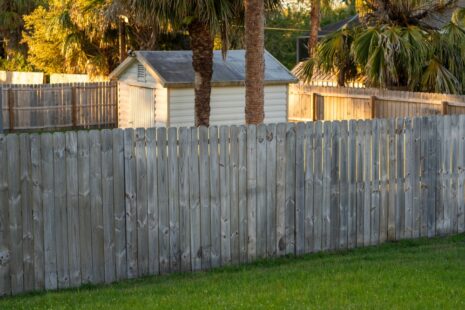
No, you should not paint your side of your neighbor’s fence without permission. Even if the fence faces your yard, it may still belong fully to your neighbor, and painting it could count as changing someone else’s property.
The safest approach is to ask first. A quick conversation can prevent a simple fence project from turning into an argument about damage, ownership, or boundary rights.
Why permission matters
A fence is not always shared just because it sits between two homes. In many cases, the fence belongs to the person whose land it is on or to the person who installed it. If that fence is your neighbor’s property, painting any part of it without agreement can cause problems.
This matters even if you only plan to paint the side you see. The fence is still one structure, and changing its surface can affect its appearance, maintenance, and value.
When it may be allowed
If your neighbor agrees
If your neighbor says yes, then painting your side is often much easier to handle. It is still smart to agree on the color, the exact area, and who is responsible if the paint causes damage or future maintenance issues.
If the fence is jointly owned
Some boundary fences may be treated as shared fences, depending on local rules and ownership arrangements. In that kind of situation, both neighbors may have some say in what happens to the fence.
Why the answer is not always simple
Fence ownership and fence rights can depend on property lines, local rules, homeowner association rules, and how the fence was built in the first place. That is why two very similar homes may have very different answers.
If you are unsure who owns the fence, it is best not to paint it until you have checked. It is much easier to confirm ownership first than to deal with a dispute after the fence has already been changed.
What to do before making changes
Confirm who owns the fence
Try to find out if the fence is fully your neighbor’s, fully yours, or shared. Fence location and property boundaries often matter more than which side faces your yard.
Talk to your neighbor
A polite conversation is often the best first step. Many fence disagreements can be avoided simply by asking and getting a clear answer before doing any work.
Check local rules if needed
If the answer is unclear, local fence rules or community rules may help explain what is allowed. This is especially important if the fence sits right on the boundary line.