The best fencing for dogs is usually a strong, secure fence that is tall enough for the dog, difficult to climb or dig under, and designed without gaps that could let the dog squeeze through. For many homeowners, the best overall choices are vinyl privacy fencing, wood privacy fencing, chain link fencing in some cases, and certain metal fences with safe spacing.
The right fence depends a lot on the size, strength, and behavior of your dog. A calm small dog does not need the same kind of fence as a large athletic dog that jumps, climbs, or digs. That is why the best dog fence is not only about material. It is also about height, gap size, and how securely the fence is installed.
What makes a fence good for dogs
It needs to be secure
A dog fence should create a clear, dependable boundary. It should not have loose sections, weak gates, or wide spaces that allow escape. A fence that looks good but is easy to push through or dig under will not work well for long.
It should match your dog’s behavior
Some dogs jump. Some dig. Some squeeze through small spaces. Others react strongly to what they see outside the yard. The best fence is the one that fits the habits of your own dog, not only the general look of the property.
Best fence types for dogs
Vinyl privacy fence
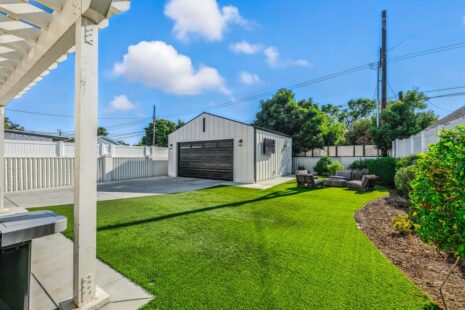
Vinyl privacy fencing is one of the best choices for dogs because it is solid, smooth, and usually has no wide openings. It helps keep dogs safely inside and can also block outside distractions that make some dogs bark or rush the fence. Since it is smooth, it is often harder for dogs to climb than some other fence types.
It is also low maintenance, which makes it attractive for homeowners who want a clean look and easy long-term care.
Wood privacy fence
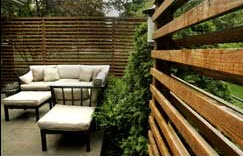
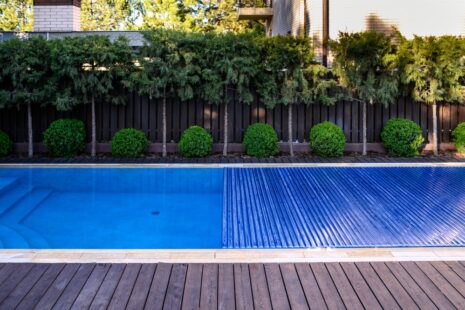
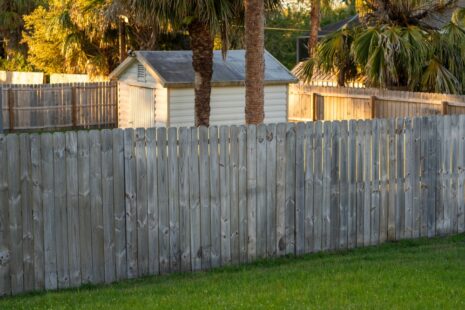
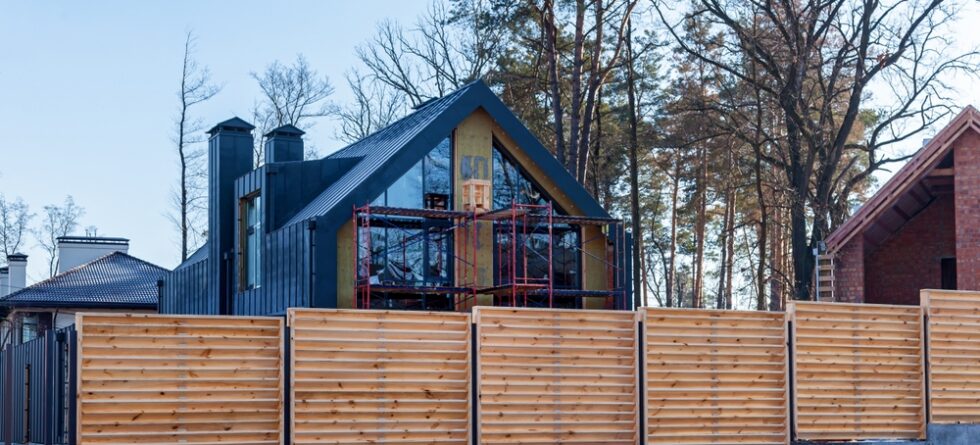
A wood privacy fence is another excellent choice for dogs. It creates a solid barrier, gives good privacy, and can work well for both small and large breeds when built properly. A tall wood fence can be especially useful for active dogs that react to movement outside the yard.
Wood does need more maintenance than vinyl, but it remains one of the most popular dog-friendly fence options because it is secure and versatile.
Chain link fence
Chain link fencing can work well for dogs because it is durable and creates a strong boundary. It is often one of the more affordable fencing options too. Still, it is not always the best choice for every dog. Some dogs may climb it, jump against it, or become more reactive because they can clearly see through it.
For some households, chain link is a practical and effective option. For others, a solid fence works better because it reduces visual stimulation.
Metal fence with narrow spacing
Metal fencing can work well for dogs if the spacing between pickets is narrow enough to prevent escape. It can be a good option for larger dogs that do not need full visual screening. Still, it is usually less suitable for very small dogs or dogs that are likely to slip through openings or react strongly to outside activity.
What fence features matter most for dogs
Enough height
The fence should be tall enough for your dog’s size and energy level. Larger and more athletic dogs often need more height because they can jump much more than many owners expect.
No large gaps
Spacing matters a lot. Small dogs can squeeze through surprisingly tight openings, and larger dogs may push at weak areas if they spot a gap. The gate area also needs close attention because it is often the easiest place for a dog to escape.
Protection against digging
If your dog likes to dig, the bottom of the fence matters just as much as the top. A fence may need extra reinforcement at ground level so the dog cannot tunnel underneath.
Fence types that may be less ideal for dogs
Some decorative fences are not great for dogs because they are too short, too open, or too easy to climb. Split rail fences, low picket fences, and wide-gap metal styles usually do not offer enough protection for most dogs unless extra mesh or other reinforcement is added.
These fence styles may look attractive, but they often do more for appearance than actual dog safety. If your main goal is containment, a more secure design is usually the better choice.