
The most soundproof fence is usually a dense, solid acoustic fence or a masonry wall built for noise reduction. When people talk about a soundproof fence, what they really mean is a fence that blocks as much sound as possible. No outdoor fence can make a yard completely silent, but some barriers are much better than others at reducing noise.
The strongest options are usually acoustic fencing, concrete walls, masonry walls, and other heavy solid barriers with no gaps. These work best because sound reduction depends heavily on mass, density, height, and proper installation. A fence that is light, open, or full of small gaps will not perform nearly as well.
Why do some fences block more sound than others
Sound travels in waves, and those waves lose strength when they hit a heavy barrier that interrupts their path. The more solid and dense the fence is, the better it usually performs. Height matters too, because a taller fence blocks more of the direct sound path between the noise source and the area you want to protect.
Gaps also make a big difference. Even a strong material can lose much of its value if sound can pass through spaces between boards, under the fence, or around poorly joined sections. That is why the best sound-reducing fences are not only dense but also tightly built and continuous.
Best fence types for maximum sound reduction
Acoustic fencing
Acoustic fencing is often the best fence choice when sound reduction is the main goal. It is made specifically to reduce sound transfer and is usually built with dense boards, tight joints, and a design that limits gaps. Compared with a standard privacy fence, acoustic fencing is often more effective because it is built as a true noise-control barrier instead of only a visual boundary.
This type of fence is often a strong choice for homes near roads, schools, neighbors, or other steady outdoor noise sources. It is one of the best options for people who want great improvement without building a full wall.
Concrete & masonry walls
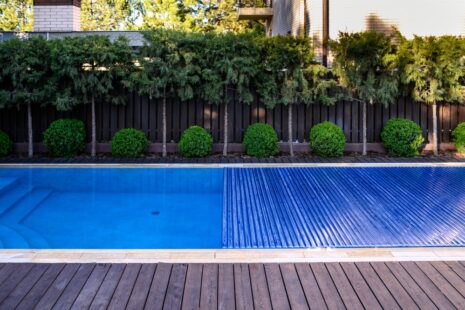
Concrete and masonry walls are often among the strongest barriers for blocking sound because they have a very high level of mass. A solid concrete wall or brick wall can reduce noise more than many lighter fencing materials. This is why they are often used near roads and in places where stronger sound control is needed.
These barriers can be very effective, but they may cost more and feel heavier visually than a typical residential fence. Even so, when the main goal is sound blocking strength, they are often near the top of the list.
Solid wood acoustic-style fences
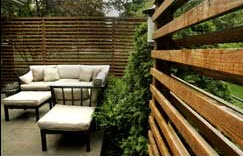
A well-built solid wood fence can also perform well, especially when it is thick, tall, and installed without gaps. Wood has more mass than standard vinyl and can be a good option when you want a more natural look while still improving sound reduction.
It may not always match a purpose-built acoustic system or a concrete wall, but it can still be one of the better residential fence options for noise control.
Fence types that are less soundproof
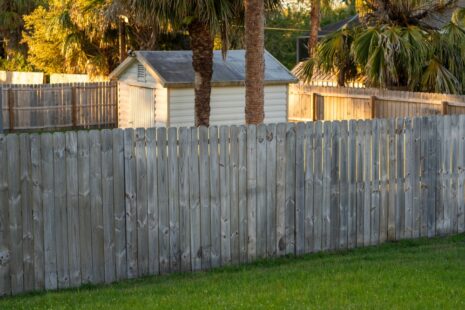
Vinyl fences, chain link fences, picket fences, and slatted decorative fences are usually less effective for sound reduction. A solid vinyl privacy fence can help a little, but it is lighter than wood or masonry, so it usually does not block as much noise. Open fence types do even less because sound passes through them very easily.
This is why the most soundproof fence is never an open or lightweight design. Strong sound reduction comes from solid construction, not from appearance alone.
What makes a fence more soundproof
More mass & density
Heavier fences usually block more sound. This is one of the most important factors in noise control.
More height
A taller barrier usually performs better because it interrupts more of the sound path. A low fence may help a little, but it usually cannot block as much noise as a taller one.
No gaps
A fence built tightly with no openings performs much better. Sound can move through even small spaces, so careful installation matters a lot.
Better placement
A fence often works best when it is placed close to the noise source or along the edge where the sound enters the property. This helps weaken the sound earlier before it spreads across the yard.
Can one fence fully soundproof a yard?
Not completely. Even the most soundproof fence cannot stop all outdoor noise because sound can still travel over and around the barrier. This is especially true with traffic noise and deeper low-frequency sounds, which are harder to control outdoors.
That is why the best results often come from combining a strong fence with other features such as berms, dense landscaping, and careful outdoor layout. The fence does the main blocking, while the other features help soften and improve the overall result.