With vinyl fencing, the biggest mistakes usually come from treating it like wood, using the wrong cleaning methods, or putting too much stress on the fence. Vinyl is low maintenance, but that does not mean it should be handled carelessly. It still needs the right kind of care if you want it to stay clean, straight, and attractive for a long time.
The good news is that most vinyl fence problems are preventable. If you avoid a few common mistakes, vinyl can stay in very good condition with much less work than many other fence materials.
Do not use harsh cleaners or rough tools
Avoid strong chemicals
Very harsh cleaners can damage the surface or leave the fence looking dull. Vinyl usually responds best to gentle cleaning instead of aggressive chemical treatment.
Do not scrub with rough materials
Wire brushes, abrasive pads, and very rough tools can scratch the surface. Once the finish is marked up, the fence may collect dirt more easily and lose its clean look.
Do not paint it without a good reason
Vinyl fencing is not meant to need regular painting. One of its biggest advantages is that it comes with a finished look already built in. If you paint it without proper preparation, the result may peel, chip, or create more maintenance later.
If a color change is truly needed, it should be done carefully and with the right products. Still, painting is usually not the first thing to do with a vinyl fence.
Do not hit it with heavy tools or equipment
Be careful with lawn equipment
String trimmers, mowers, and other yard tools can damage vinyl fencing if they hit it often. Repeated impact can scuff the fence or weaken parts of it over time.
Avoid hard impact in cold weather
Vinyl can become less flexible in very cold temperatures. That means strong impact in winter can be more likely to crack or damage the fence than the same impact in warmer weather.
Do not ignore drainage & ground conditions
A vinyl fence should not be forced tightly into uneven ground or buried in a way that puts constant pressure on the panels. Poor drainage, shifting soil, and heavy buildup around the bottom can make the fence harder to maintain and may affect how even it looks over time.
Keeping the fence line clean and allowing the system to sit properly above the ground usually gives better long-term results.
Do not assume all vinyl is maintenance free
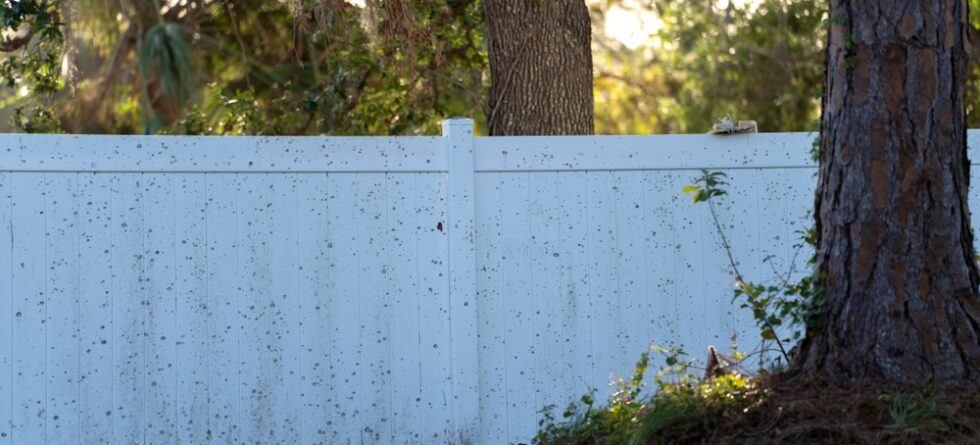
Vinyl is low maintenance, but it is not no maintenance. Dirt, mildew, and stains can still build up on the surface, especially in damp or shaded areas. Leaving the fence dirty for too long can make it look older than it really is.
Simple cleaning from time to time usually solves this, but ignoring the fence completely is not the best approach.
Do not overload gates or weak sections
Gate areas take more stress than standard fence panels. Hanging extra weight, allowing sagging to go unfixed, or using the gate roughly can create problems faster than on the rest of the fence. Posts and hinges need to stay strong and properly supported.
A vinyl fence works best when the heavier-use sections are treated carefully and checked once in a while.
Do not choose the wrong product for the job
Not every vinyl fence is made for every purpose. A lightweight decorative fence may not be the right choice for strong wind, large dogs, or areas where privacy and strength matter most. One of the biggest mistakes is choosing vinyl by appearance alone without thinking about how the fence will actually be used.
The best results usually come from matching the fence style and quality to the real needs of the property.