
If you live in a location that experiences strong winds or frequent storms, choosing the right type of fence is essential for long-lasting performance and safety. Not all fencing materials and styles are equally equipped to withstand wind pressure. Some fences can act like sails while others allow air to pass through, reducing strain.
The best fences for windy areas balance strength, airflow, and structural support. Understanding how wind interacts with different fencing options helps you choose the most suitable solution for your property.
Open Style Fences That Allow Airflow
Picket Fences
Picket fences have spaced vertical boards that allow wind to pass through easily. Because air can move between the pickets, there is less pressure on posts and rails. This makes picket fences a strong choice for windy conditions.
Chain Link Fences
Chain link fencing is ideal for wind-prone areas because it offers nearly no resistance to air flow. Wind moves freely through the mesh, reducing the chance of damage. While it does not provide privacy, it is durable and low-maintenance.
Vinyl Fences With Airflow Designs
Semi-private vinyl fences, which have small gaps between alternating boards, allow some air movement while still providing privacy. These can be more wind-resistant than fully solid panels, especially when reinforced posts and concrete footings are used.
Considerations For Solid Privacy Fences
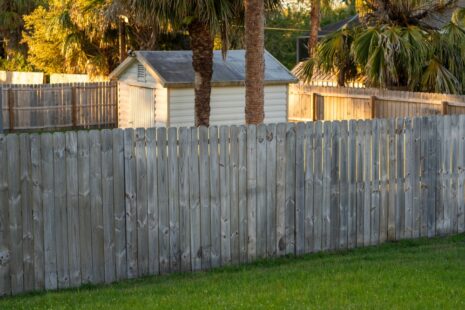
Solid vinyl or wood privacy fences can block wind, but they also catch wind like a sail. In high wind zones, this creates greater strain on posts and can lead to leaning or damage unless reinforced. Using internal metal reinforcement and setting posts deep in concrete increases stability, but open styles often perform better overall in windy conditions.
Material Strength Matters
Aluminum Fences
Aluminum fencing combines open design with corrosion resistance. It allows air flow while remaining sturdy. It is often used for decorative boundaries and pool enclosures where the wind can be strong.
Wood Rail Fences
Wood rail or split rail fences are open and allow air movement. These are excellent for windy areas because they create minimal resistance. While they may not offer privacy, they are long-lasting with proper treatment.
Installation Tips For Windy Locations
Deep Set Posts
Posts should be buried deep enough, often below the frost line, to resist wind uplift and soil movement. Concrete footings improve anchor strength.
Reinforced Systems
Choosing fence systems with internal post reinforcement or heavier gauge materials adds strength. These options are helpful when privacy and wind resistance both matter.