Yes, vinyl fencing can stand up to wind, but how well it performs depends a lot on the fence design, the quality of the material, and how well it is installed. A good vinyl fence with strong posts and proper support can handle normal windy conditions very well. Many homeowners choose vinyl because it is durable, low-maintenance, and able to perform well in everyday outdoor weather.
Still, wind puts real stress on any fence. A vinyl fence is not automatically windproof just because it is made from vinyl. The way the posts are set, the height of the fence, the style of the panels, and the local wind conditions all make a big difference.
Why vinyl fencing can handle wind well
It has some flexibility
Vinyl is not completely rigid. It has a little flexibility, and that can actually help in windy weather. A fence that can give slightly under pressure may handle gusts better than a material that is too stiff and more likely to crack under sudden force.
It does not rot or weaken from moisture
Wind often comes with rain, wet ground, and changing weather. Vinyl has an advantage because it does not rot like wood. That can help it stay strong over time instead of slowly weakening from moisture exposure.
Quality systems are built for outdoor conditions
A well-made vinyl fence system is designed to work in changing weather. Strong posts, good rails, and a proper layout all help the fence perform better when wind pressure builds.
What affects wind performance the most
Fence style
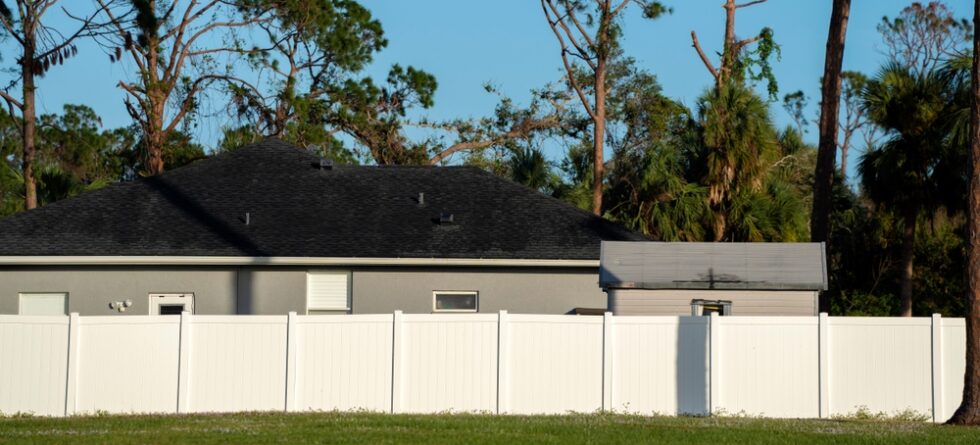
Solid privacy fences catch much more wind than open picket or spaced designs. Since air cannot pass through easily, a tall solid vinyl fence takes more pressure during strong gusts. Open styles usually handle wind more easily because they allow airflow.
Post strength & depth
The posts are one of the most important parts of the fence. If the posts are too shallow, poorly supported, or not secured correctly, the fence may lean or move too much in windy weather. Strong post-installation is a major part of wind resistance.
Height of the fence
Taller fences usually face more wind force than shorter ones. A tall privacy fence may need stronger support than a shorter decorative fence because it acts more like a wall when the wind hits it.
Local weather conditions
A fence in a mild area may do very well, while the same fence in a very exposed or storm-prone area may need extra planning. Homes in open landscapes, coastal zones, or places with strong seasonal winds often need more careful fence choices.
When wind can become a problem for vinyl fencing
Wind becomes more of a problem when the fence is very tall, fully solid, installed poorly, or made from weaker materials. In those cases, strong gusts can lead to swaying, leaning, loose rails, or even broken sections if the pressure is too high.
A vinyl fence can also be more vulnerable if the posts have shifted over time or if the ground around them has become unstable. Wind damage is often tied to support problems just as much as the fence material itself.
How to help vinyl fencing perform better in wind
Choose a quality fence system
A stronger vinyl fence with solid construction usually performs better than a low-quality one. Better posts and better materials can make a real difference in windy conditions.
Use proper installation
Correct post depth, secure concrete footings, and careful spacing all matter. Even a good fence can struggle in the wind if it is not installed the right way.
Match the style to the location
If your area is very windy, an open fence style may perform better than a fully solid privacy fence. If privacy is important, the fence may still need extra support to handle the added wind pressure.